Thursday, November 10, 2016

FUN TO READ

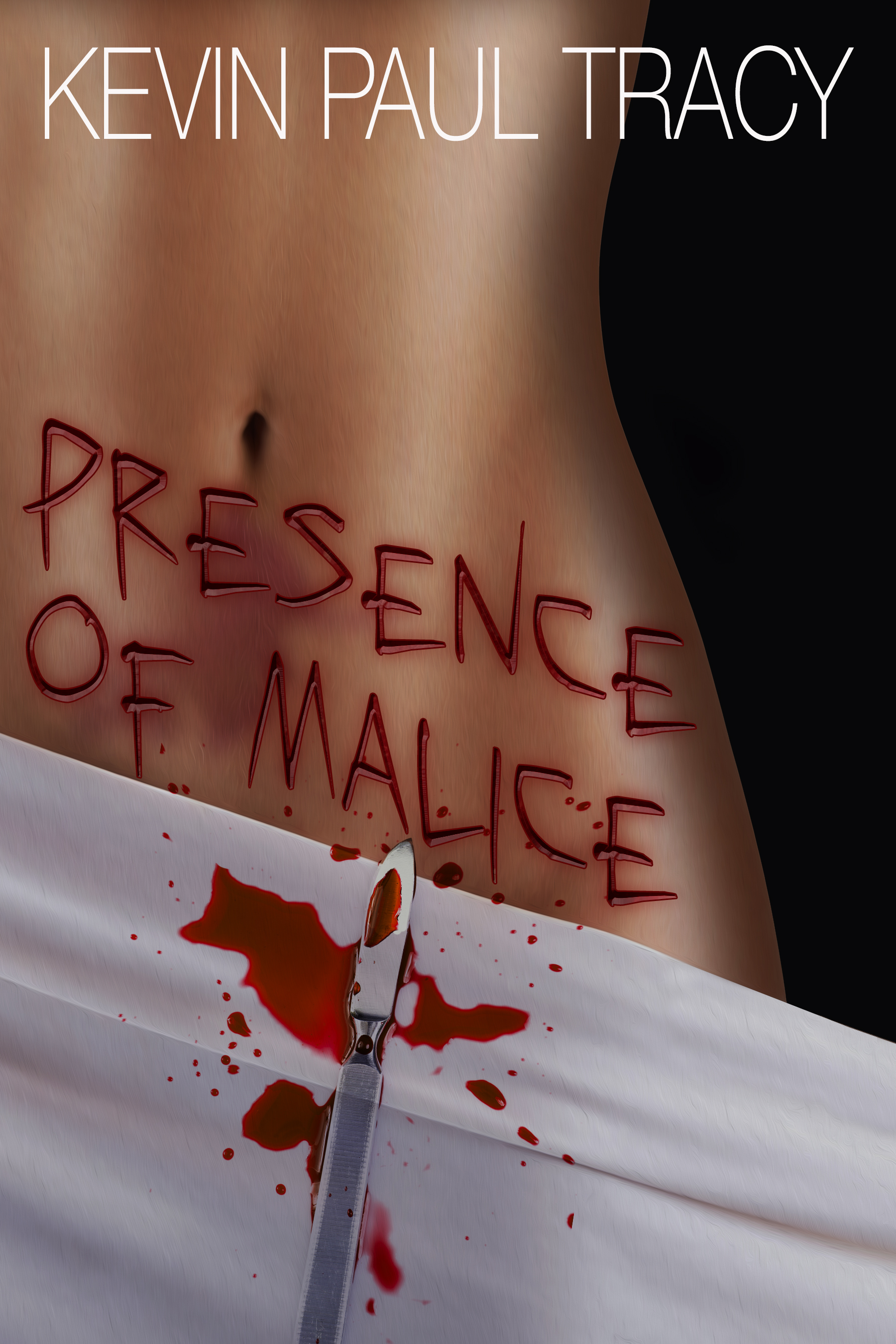
Presence of Malice by Kevin Paul Tracy

I am a regular contributor to the Rocky Mountain Fiction Writers blog. My articles appear on the first Thursday of every month. I have four books currently in print, a game, and two anthologies that I have either written for or edited. I have at least three other projects in the works and bound to be released soon.

I don't always do well in promoting myself and the stuff I have out there that readers might enjoy. I've always found self-promotion rather unsavory, the people quite adept at it equally as brutish and unpleasant to be around. But I really do think there are a lot of readers out there who will enjoy the books I've written, so when I encourage you to buy and read my books, it is only partially self-serving (I actually don't really make much on sales of my work) but it truly is an honest desire to share with others some fun, interesting, diverting, and quite entertaining stories and really do believe they will get a kick out of.

Maybe my books don't become you're favorites, still I promise you a fun time, something you'll enjoy, and even share with friends. Check out my books and if you like them, post an online review, I really do read those.

Labels: , , , , , , , , , , , , , ,

Friday, September 02, 2016

PATRICIA DUFFY - FROM PLAIN TO PLAIN AWESOME!

    Patricia Duffy is the foremost female heroine in my latest thriller, Presence of Malice. Many readers have asked how someone as nice as Patricia ended up working for such a prick as Dr. Gerald Gannery, and moreover, why she stayed.

    Such things happen gradually. To a wide-eyed college student still several months away from graduating from business school, it seemed like a dream job come true, at first. Not only was one of New York's most prominent plastic surgeons and purported philanthropists willing to hire her as his business manager before she graduated, but he would pay all of her student loans and buy back the mortgage her parents had put on the family ranch to pay for it. When, after a year beyond graduation, Gannery never did get around to signing the mortgage back over to her parents, well it seemed ungrateful and rude to press him on it. So she waited, hoping he would remember his promise himself.

    The job itself never quite seemed to rise to the level of Business Manager, either. While she was given free reign over his schedule and appointments, many of which were for consultations but none of which were ever for the actual surgery itself, he remained quite secretive about the practice's books and investments. It wasn't for some time that she realized he wasn't being cautious, he had no intention of sharing the books or other aspects of the business with her, and her job quickly devolved into little more than Secretary, though she preferred Executive Assistant.

    Patricia was raised on Midwest Judaeo-Christian values, to respect authority and one's elders, to show gratitude to benefactors, to be humble and never boorish or overbearing. When Gannery expressed dissatisfaction with her performance, she strove to do better. When dissatisfaction became disdain, and disdain gradually gave way to outright disrespect, still she tried to work harder to please him. By the time things had progressed to full-blown abuse, she wasn't in a position to recognize it right away. Her focus still remained doing a better job to please her boss.

    So what finally gave her the spine to rebel? It was a combination of factors really. His most recent tirade when she failed to book a socially advantageous lunch date for him led directly into his public humiliation of her on national cable television. That left her in just the right resentful mood when she spotted Gregory, Jet Gatling's paraplegic brother, hacking into her employer's computer. Suddenly, lashing out, getting back at Gerald Gannery was all she wanted to do.

    Read the exciting Presence of Malice and see how she does it!

Labels: , , , , , , , , , , , , ,

Monday, August 29, 2016

Jet Gatling - Man of Mystery

Jet Gatling is the central character in my latest book, Presence of Malice, and yet very little of the book is told from his point of view (only two short narratives, in point of fact.) I did that deliberately, I wanted Jet to remain a mystery to the reader, with a big question - is he the good guy or is he another bad guy? If a bad guy, why didn't he outright kill Dr. Gannery, the man he'd been contracted to take out, given multiple opportunities to do so? If a good guy, then why doesn't he warn of the bomb that takes out an entire hotel floor?

These and other burning questions are answered in Presence of Malice, hopefully to the satisfaction of the reader. All except one - how far is Jet willing to go? What lines in he willing to cross? What, if anything, will make him stop and reconsider his rage-blind determination to accomplish what he sees as necessary?

Add Jet to any situation and he immediately becomes the wild card. There's no predicting what he's going to do, or how he'll go about fulfilling his contract. Is he constrained by the same laws and moral code as the rest of us? Or have his years as a Navy SEAL, carrying out black ops for his government, placed him above the law? Did eight years as a prisoner in a Chinese prison, disavowed by the same government that used to employ him, tortured endlessly by his captors for information, unmoor his moral compass, send him adrift amid his own roiling rage, to redefine justice...his own way?

Read Presence of Malice and decide for yourself!

Labels: , , , , , , , ,

Friday, August 19, 2016

Politics Religion

I have maintained a strict "no politics, no religion" policy when it comes to my public writings, such as this blog. Believe me, that isn't always easy, especially this election cycle with everything that's going on. I long to speak out on my views, defend my beliefs and take to task the deliberately twisted rhetoric of the other side. I have opinions, expressed or not, and it goes against the grain not to express them in the public forum, be heard, and add my voice to the strength of those on the same side of the important issues of the day as me.

There are those who have told me that, given the public platform I've been able to gain through my publicity and my books, that I am even obligated to use it to add my voice to the public square, lend my reason and logic to the strength of my "side," and exercise my freedom of speech and the soap box I've been granted through my success in a way that matters for the lives of current and future generations.

But I'm not going to do that. I'm gong to resist the considerable temptation to do so. Why? Because if my opinions and convictions serve to sway anyone to my "side," it isn't really going to be many. Most people who hold convictions are usually pretty invested in those convictions, and it is going to take more than some Facebook posts, tweets, and blog articles to change their minds, even by one of their ostensibly favorite writers. And anyone so easily swayed is probably prime to be easily swayed back again. In the end, the difference I could make would be marginal at most.

Meanwhile, I risk alienating readers, who could learn more about my convictions and the motives behind them by reading my books and stories. My convictions are there, in everything I write, but they are not preached or brayed. They are woven into the fabric of the plots, the actions of the heroes and heroines, and even reflected (in the reverse way the a mirror reflects) in the actions and motives of my villains.

So don't look for me to be arguing politics or religion on this blog, or any of my public media. I have better, more effective ways of getting my points across.

Labels: , , , , , , , , , , ,

Thursday, June 11, 2015

THE HERO ETHIC

Many of you have asked me to publish this and here it is finally: my manifesto of The Hero Ethic, the ethics and qualities of a true-blue fictional hero. Dyed in the wool heroes are no longer in vogue these days, we like our protagonists flawed and damaged, struggling themselves with things such as ethics and morality, very much human and prone as much to be the authors of disaster as they are to be the solution. But in my opinion, it's hard to write any kind of hero, even a flawed one or an anti-hero, unless you have a solid understanding of what the real thing is. In just the way that we cannot effectively break the long-standing rules of narrative and prose until we understand those rules completely, we cannot truly create an effective anti-hero or flawed protagonist unless we have a sense of what the brand spanking new, out-of-the-package, shiny, non-dented or scratched model looks like.

One last disclaimer: these items are my own beliefs and opinions of what make up a true hero. I did not garner them from someone else, these are opinions I formed over centuries (well, okay, decades at least) of reading and writing fiction across the spectrum. They may be up for debate, but I submit this is the kind of hero that best deserves the title.

S T O I C
A hero never complains, or whines about how difficult a task is. He/she merely puts his head down and does what needs doing. Dirty, exhausted, and beaten half to death by the giant guarding the airplane, when Indana Jones is told that the ark has been moved to a truck for transport, he doesn't moan, groan, bitch, or complain. He sets his jaw and asks, "What truck?" (Raiders of The Lost Ark)

C I R C U M S P E C T
A hero never divulges information that is not his to share. Hired by a mafia boss to guard his daughter, Murph says nothing when the father asks him what ugly things his daughter has said about him, Murph merely changes the subject. The Don may be his client, but Murph was not hired to spy on the girl, only to guard her. He would never have taken the gig in the first place if that had been part of the deal. (Bullet's Wake, to be released fall 2015)

C H I V A L R O U S
A hero is always courteous, respectful, and ready to defend the innocent and defenseless. Hunted by the a relentless United States Marshal, nevertheless Dr. Richard Kimble pauses to correct an error made in the triage of a woman in an emergency room, saving her life, even aware that doing so may well expose him. (The Fugitive)

Errol Flynn

Furthermore, a hero will never attack a defenseless opponent. In the famous sword fight scene, Inigo Montoya chivalrously waits for the man in black (the Dread Pirate Roberts, aka Wesley the farm boy) to finish climbing the cliff, and even to regain his breath, before they commence their epic dual. (The Princess Bride)

F A I R
The true hero will never solve one dilemma by means that would cause another harm in any way. Several times then naval aviator and now Senator John McCain was offered the opportunity to be released from the infamous Hanoi Hilton (Hỏa Lò) prison camp and he refused each time unless every prisoner captured before him was also released, thus denying the enemy what would have been a propaganda tool and public relations coup. For these refusals he was brutally tortured.

A B O V E   B O A R D
A hero never sneaks, slithers, or uses subterfuge when confronting and fighting "evil." He stands boldly at the crest of the hill shouting, "Here I am! Come and get me!" He faces his enemies boldly and openly, with nothing to hide. William Wallace lines his army up in the open on the opposite side of the field from the English troops, and charges them openly. (Braveheart)

I T ' S   N O T   P E R S O N A L ,   I T ' S   R E V E N G E
The true hero never seeks revenge for personal injuries or insults, but he will relentlessly seek justice - call it vengeance if you wish - for wrongs done to loved ones. Harry Potter suffers no end of humiliations at the hands of his cousin Dudley and his friends, but while he once threatens Dudley he never actually follows through on any reprisals. But when Draco Malfoy calls Harry's dear friend, Hermione Granger, a "...filthy little mudblood!" Harry terrorizes the bully and his henchmen, sending them running and screaming from the glade.

A B O V E   D E F E N S I V E N E S S
A hero will never apologize, never explain, and will never stoop to defend himself against spurious accusations or defamation. He understands that apologies are weak, and instead bends his efforts toward rectifying, remedying, or repairing any damage done. Explanations are merely excuses, and the hero will never attempt to excuse his actions, nor will he defend them. He understands that his actions reflect his best and most honest attempts to deal with a situation given the information he had at the time, regardless of how circumstances may have changed later. He will never lower himself to the level of his critics by even attempting to defend himself against slander or ridicule. He understands that those inclined to think well of him will continue to do so, and those not so inclined will likewise persist in their bias. Nothing can be accomplished by engaging the petty and the strident except to appear every bit as petty and strident as they.

S T E A D F A S T
No matter the circumstance the hero will never betray these ethics, even when placed in a position where doing so would, in the end, serve the greater good. The ethic is always more important than any other consideration. In so many books and films that the reader must have read/seen at least one (too many to count really) there is the overwrought cliche of the hanging villain, clinging to the hero's hand lest he fall to his death, and the hero is never the one to let go first, even though doing so would rid the world of the villain. Sometimes even as the villain continues to lash out at him.

Labels: , , , , ,

Tuesday, June 02, 2015

THINGS TO DO IN VEGAS WHEN YOU'RE UNDEAD

Sorry it's been a while since I posted on this blog. Been busily promoting the release of Bloodtrail, the enthralling sequel to Bloodflow. Sales are steady and we're pleased. I'd like a few more reviews on Amazon.com and Goodreads.com but I am pleased with the ones I have. It strikes me as I read these reviews though, that many readers are reluctant to reveal certain details about the book for fear of giving spoilers. Well, as the author of the book there are certain details I don't mind you knowing, as I think they help readers see what a fun and exciting adventure the book is!

So below is a list of some of the details I don't mind you knowing about Bloodtrail before you buy:

  • In the first book, Bloodflow, Kate only had enough time to learn a few things about what it means to be a vampire when it became necessary to betray Darkthorne and help Litchner's militia destroy him. Even then, she was in a haze of denial. Now, in Bloodtrail, a year later, she still hasn't fully come to grips with what it means to be one of the undead. She has made the necessary concessions to her new nature - she only works at night, she feeds as her animal counterparts, the Falcon and the panther, and no longer eats regular food. But she is still striving to live her life as normally as possible. She avoids the use of her new capabilities where possible, has refused to explore what other powers she may have that Darkthorne didn't have time to teach her, and has otherwise entirely ignored the fact that she is no longer human. But this sort of denial of her true nature is a time bomb, and on her new assignment to find a poor misguided runaway teenaged girl, Kate will find herself confronted with the realities of her new form of existence in brutal ways that will no longer allow her to deny it - she is a vampire!
  • Kate runs afoul of a cabal of creatures that look entirely human but who are able to draw off of the most foul, greedy, prurient, unsavory emotions of human kind as if it were a narcotic. They are addicted and have resorted to hosting a series of gruesome and bloody gladiatorial games to elicit these emotions from their guest in order to get their fix. The creatures are able to recognize Kate for what she is, and she them, but as they lack any real power Kate dismisses them as no real threat. But struggle as Kate might with the moral and ethical implications of what it means to be a vampire, the leader of these creatures, a Mr. Konig, entices her, tempts her, and seduces her to drop all pretense to the hero's ethic and fully and freely indulge her power, take her place as superior to the humans around her, and rule them.
  • In all his eight centuries of roaming the Earth, Darkthorne claimed to never have met another vampire like himself, except those he, himself, fathered and later destroyed out of self preservation. Kate herself learns what this means first hand as she inadvertently encounters a newly-minted vampire and must fight him to the death in all their animal forms - she the panther and the falcon, he a hyena and a giant bat.
  • As in the first book, Kate finds herself pitting her supernatural powers against man's technology in a climactic scene, trapped in the belly of an unmanned fighter jet that is targeting two innocent young people fleeing for their lives.
  • Early in the book Kate saves the life of a very unlikely ally who, in the end, defends, protects and nurses her as she strives to recover from a catastrophic, near-fatal conflagration.
These are just some of the thrilling adventures waiting for you in Bloodtrail, sequel to the equally as exciting Bloodflow!

Labels: , , , , , , , , , , , ,

Tuesday, January 27, 2015

SEQUELS

    I'm back from a long hiatus. I apologize to regular readers of my blog - it appears when I'm writing a manuscript, most of my writing energy is taken up by that. Between that and certain outside obligations - most notably my monthly contribution to the Rocky Mountain Fiction Writers blog the first Thursday of every month - and it seems I have little energy left to keep up my own blog. I'm going to work on that in the future, because this blog is every bit as important to me as any of those other projects. It's how I keep in touch with my readers, after all.

    The good news is Bloodtrail, the hotly-awaited sequel to Bloodflow, is off to the editor. Now the rest is up to him. But this has prompted me to share a few thoughts I have on sequels. A new perspective, as it were, gained by working on this project and facing the age-old challenges of all writers struggling to write a series.

    For example, with so many fans of the first book, is it possible to please them all? It's unlikely that everyone likes all the same things about the first book, so what are those elements of the first book that drew most readers and kept them reading? Can those elements be carried over to a sequel? Can you pick-up, once more, the same rhythm and cadence of the first book, the same atmosphere and voice, while also making it fresh and advancing the series in important and, most of all, entertaining ways?

    The biggest difference I see between a single, stand-alone novel and a series is that while a single novel deals with a a story arc, and with character arcs, a series expands that. Each successive sequel must contain it's own, internal arc, yes, but now it must also extend an even larger arc that is not resolved in each book, but is carried over throughout the series. Likewise, the arc of recurring characters must also extend across the series. While some conflicts must be resolved in each book, others must be carried over. And these extended arcs must by expanded in realistic, believable ways. There are television series on the air now who use old, dried-up soap-opera tactics for extending story arcs, plainly transparent artificial constructs to make a plot-line carry over several episodes. These blatantly manipulative "plotting devices" insult me, and therefore they anger me. I can only imagine others feel the same way. I don't want to insult or anger my readers, so I better make damn sure that my extended plot-lines come tight and smart and believable.

Super Mario Bros

    In video game design, there are four levels of opponents a user must face. There are Pawns, or nuisance opponents that present obstacles but little more than that. These are the little mushrooms or strawberries or ghosts or whatever that could kill you if they hit you head-on, but are easily dispatched with a single shot or bop on the head or other similarly simple action. Then there are the Fighters, the ones that, themselves, track you, follow you and shoot at you. They are also fairly easily dispatched as long as you are wily and don't get hit first. Next, there is the Boss, who much like the fighter can track you and shoot at you, but who also must take more than one hit in order to defeat. Then, finally, there is the Super-boss. The Super-boss is the hardest yet to kill. He is smart, mobile, heavily armed and heavily protected. Killing him is not a straightforward proposition, you must make use of some trick or special ability or some such rare commodity to defeat this villain.

    Writing a series is much the same. There is the immediate plot-line of the current book, the obstacle (which does not have to be a human enemy, perhaps a disease or impending tornado, etc.) which must be overcome within the current plot-line, being resolved by the end of the book itself. Then there is the small-arc plot-line - an obstacle that recurs over a wider arc than just one book, but not, perhaps, the entire series. This plot-line can take two, three, even four volumes to be resolved. And finally the overarching series plot-line, the primary question of all questions that cannot be answered so easily, but whose solution must be found by the final book in the series.

    These are the series' that grab and hold my attention, and I imagine most readers as well. This, I think, makes a great starting point when developing a series. Please feel free to share, via comments, below, your thoughts or ideas on other things to incorporate into a successful series.

Labels: , , , , , , , , ,

Thursday, September 25, 2014

BACKGROUND NOISE

Music

    This week's article is going to be a brief one. I wanted to wax rumanitive about background noise when you're writing. Some people are not only able to write in a cone of utter and complete silence, or as close as one can get, but they even require it. I can't imagine that - silence drives me crazy. To me, and this is just my opinion, but I'm sure certain others of you out there agree, silence isn't anything in an of itself, but rather the lack of something...noise.

    I've been known to write in noisy places: the cafeteria in high school; at home with parents and siblings talking or arguing or playing loudly; at a restaurant or cafe; etc. Once I lived in a house in which my den window overlooked a preschool. It was about a half a block away, so it wasn't too loud, and I actually found the mixed and incoherent sounds of children playing soothing and very conducive to concentration. Some of you probably find that hard to believe, and I suspect you have children of your own and so hear such racket much too often and much too closely.

    A writing buddy has a machine...yes, an actual machine...that produces "white" noise, which from all I can tell is pretty much just an electronically produced hissing or shushing noise. He finds this most conducive to writing. Others I've talked to have machines that produce the sounds of the ocean, tropical rain forest, deep woods, etc. That does sound kind of nice, to me.

    These days more often than not I put on one of several Pandora stations I've created to listen to while writing. For those of you who don't know, Pandora.com is one of those websites that allow you to define audio channels to your own taste - you can thumbs-down tracks you don't like and don't want included in that particular channel, and thumbs-up tracks that fit well. Based on this Pandora does a remarkably good job at selecting tracks from literally millions at its disposal that most closely fit the tracks you've indicated you like. The more thumbs you click, up or down, the better job it does at this. The free version includes ads which aren't too intrusive, or you can pay the nominal monthly fee for the ad-free version, which has turned out to be worth it to me.

    I've created a couple of favorite Pandora channels that are so ideally suited to my writing I find it hard to imagine how I got by without it before. For calmer, beatific, even romantic scenes or chapters I have a channel with mixed New Age classical music, which is absolutely NOT muzak, but a softer mix of music influenced by Celtic, Native American, Asian, even sometimes African traditions. For more lively, upbeat, or silly passages I have a channel of Broadway musicals. Yes, that's right, I love broadway and I'm straight...deal with it! Heheh...

    But given that I mostly write adventure/thrillers, my favorite channel by far is the one I call Epic Soundtracks, which plays instrumental tracks played behind some of the world's greatest movies. You don't often notice the music when you're at a movie, but listening to these tracks I've discovered some of the most surprisingly beautiful and inspiring orchestral pieces I've ever heard before in my life. Music from movies like Pandora, Lord of The Rings, Cloud Atlas, and so many others is not only ideal for writing scenes of epic struggle and sacrifice myself, but has actually become one of my favorite things to listen to even when I'm not writing.

    I'd love to hear about the kind of background noise you have to tolerate when you write, or choose to listen to for inspiration. Drop me a comment.

Labels: , , , , ,

Thursday, September 18, 2014

WHAT'S THE WORST THAT COULD HAPPEN?

Desert

    We all know it. Like the demon possessing the man from Gadara, it is Legion, and it goes by a hundred different names. The bog; the swamp; the stairway to nowhere; the wall; the well; the pit; the wasteland; the middle part; etc. It is that part of our story past the setup and the inciting incident, but before the build to the climax. It's the middle part of our book in which the story must be carried forward, but we have no earthly idea what to do with it. Understandably, the opening and inciting incident of out book gets a lot of attention - often it was the idea that sparked us to write this book to begin with. Generally the climax and denouement of our story has gotten at least some focus, as well - we've at least imagined variations on how to bring our story to a close. But the middle part rarely gets much thought until you're there. And then, you're stuck.

    Generally I find this is a great time to introduce complications into your story, subplots, if you will, as we discussed earlier this month on the Rocky Mountain Fiction Writers blog. But what kind of subplot could we introduce? We've given our main plot a lot of thought, now suddenly we have to come up with another?

    I've heard the advice before, and though I've never had occasion to use, it, it's an interesting thought. Think of the worst thing that could happen in relation to your story...and then make it happen and see how your characters react. If you've set up a murder mystery in which an innocent man is imprisoned forma murder he didn't commit, ask yourself, after all the setup and inciting incident, what's the worst thing that could happen? Maybe he gets shanked in prison by someone connected to the victim; maybe his six-year-old daughter is kidnapped by a disgruntled relative of the victim; maybe he is visited in prison by a US Marshal and we discover that not only has he been living under Witness Security, but because of the arrest they are cutting him off. Anyone of these twists can eat up a lot of pages to bring around, meanwhile still advancing your main plot.

    I keep telling myself one of these days I'm going to try this in one of my books. Unfortunately up to this point my stories have been pretty tightly scripted, with not a lot of room for experimentation like that. But if anyone out there has tried this trick, or plans to after reading this blog, my readers and I would love to hear about how it all came out in the comments, below! Drop us a line.

Labels: , , , ,

Friday, August 08, 2014

THINGS I HATE ABOUT WRITING

    I love writing. It's much more than a pass-time or hobby for me. Yes, you could call it a drive, or obsession. But even more than that, it is sustenance, nourishment to me. When I haven't written in a day or two, the urge to do so is much like starving.

Man pulling his hair.

    On the other hand there are some things I downright hate about writing! Things that drive me bat-shit crazy and make me want to throw my typewriter across the room (if I wrote on a typewriter instead of a laptop.) Here are some things I hate about writing.

    I hate it when the final sentence of a chapter ends up, through coincidence, alone at the top of an otherwise blank page, all by itself! Since much of what I write involves adventure and action, most if not all of my chapters end in some sort of cliff-hanger. That means generally the single most important sentence in a chapter is the very last one. I can't just cut it! But leaving a single sentence alone on a page is a formatting nightmare - it doesn't just waste space, it looks stupid! And you would think, given the literally tens of thousands of words I write in a book that this would have to be rare, but you'd be surprised how often it happens! Argh!

    I hate cutting! Removing parts of my blood from the page, whether for space or just because it doesn't contribute to the overall narrative. I have no trouble adding more story, but I hate cutting. The words I write are like my children. What if someone told you one of your kids didn't fit in with the rest of the family and you had to get rid of her?

    I hate the swamp! You know it. It's that stretch of the book somewhere just past the middle where you suddenly find yourself stuck for story. You've worked hard and done an admirable job of writing the beginning of the story, setting up great conflict and plot, characters and events, and even carried them forward toward a phenomenal climax and denouement. You know in your head how you want things to come together at the end. But you're not there yet. If you ended things here the book would be too short. You need to carry the story forward more, ratchet up the tension, bring the readers along toward the climax. But you're stuck. You can't think of what to add to prolong the conflict and enrich the plot. The swamp. Grrr!

    Sex scenes. I know I'm not alone in this. The search for metaphors and similes and imagery and subtext for sex is exhausting and frankly not very sexy. Just about everything has already been used as a metaphor for sex in literature: from automobile racing to cooking; from rock-climbing to cliff-diving; from horseback riding to, of all things, golf! The movie Ghost found a way to make pottery-throwing sexy. Go figure. Trying to find new and fresh ways to say "they fucked" without being so crude and abrupt about it is work, not fun!

    Meta-choreography. Choreography, in writing, is placing each character on stage where he needs to be for the scene to work, and being sure the reader can envision that. What I call meta-choreography is bringing all of the characters into place for the final conflict and resolution. Sometimes it's hard: he's just boarded a plane in Baltimore but you need him to be in Los Angeles sooner in order to be in place on time; she needs to be at the arena before the bus explodes, but it is essential she take a shower first so she doesn't show up smelling like teargas; the hero must be knocked unconcious in order to have the final vision that explains everything, but he can't still be unconscious when the aliens arrive or he'll miss the final battle, in which he plays a pivotal role; etc. Sometimes meta-choreography can be a bitch.

    So what are some things about writing you find frustrating?

Labels: , , , , ,

Thursday, July 24, 2014

WHAT OTHERS DON'T GET ABOUT WRITERS

    My friends don't understand how I can write so much. For that matter, my family doesn't get me, either. Only other writers, with the same devotion, the same passion, the same drive as I have, get me. Which is why attending critique groups and writers conferences can be such an important part of being a writer - just a couple of hours' exposure to other writer can energize the creative batteries more than almost any other writing-related activity.

    So what is it that others don't get about writers?

    Well, for one thing, they think it is a lonely, solitary profession. What they don't understand that when I'm sitting alone at my computer writing, I'm not as alone as it may seem. That room is crowded elbow-to-elbow with characters, all clamoring to be heard. Granted, not all of them are very likeable people, and some are down-right despicable human beings. But it's anything but lonely, and the furthest thing from boring that I can imagine.

    Another thing they don't understand is how I can have so much to say. "How do you come up with all those stories?" they ask. As fellow writers, you know that our minds are never idle. Any snippet of conversation, song lyric, grocery store mishap, traffic altercation, overheard argument, etc. can spark the flame of inspiration in us. We are constantly thinking in terms of storyline and plot, meaning and subtext. I once drove by a restaurant with a fountain out front. There was a single young girl sitting alone on the low retaining wall of the reflecting pool, dressed impeccably and even a little provocatively, in a tasteful way, looking into the water, lost in thought. I began to spin a yarn centered around that single image out loud to my companion in the car and by the time we got to our destination I'd woven a complex plot involving inchoate love, loss, epic war and a solitary gold Roman coin that had inspired men for centuries, both to the good and the evil. My passenger was gob smacked at what I'd done. But to me in was all in a day's occupation.

    Something I hear often from my non-writer friends is that they often thought about writing a book or short story, but hadn't, yet. What they don't get about writers is that when the urge to write hits us it isn't a vague impulse, but an obsessive drive that gnaws at the base of our skull, much like a migraine, until we finally feed the beast and sit down to write. If you're like me, and you haven't written anything in a few days, you start to get irritable, snippy with other, and sometimes downright cranky. A writer needs the outlet of writing like a full bladder needs pissing. And you can quote me on that!

    Others don't get us, but our fellow writers do. That's why every o9nce in a while we need to be around other writers. To be reminded that there are others out there just as haunted by phantom characters, inspired by seemingly mundane events around them, and just generally grumpy little crazy people...like us!

    For just such a fix, look into attending this year's Rocky Mountain Fiction Writers Colorado Gold Writers Conference this year.

Labels: , , , ,

Sunday, April 13, 2014

SUSPENDING BELIEF...OR HANGING IT BY THE NECK UNTIL DEAD?

    First, let's all agree - fiction isn't real life. Readers of fiction read for diversion from real-life cares and woes. One can become invested in the lives of characters without paying the very real price, which more often than not is a broken heart. Still, in order for readers to care, the characters in the novel and the world in which they inhabit need to bear as much similarity to our real world as is necessary for us to identify with them and their dilemmas. Even in speculative fiction - Asimov was a master of taking creatures utterly alien to us (read "The Gods Themselves") and making us care about their lives and the challenges they face. The key is creating a world who dangers, pitfalls, and rewards are those we, as readers, can identify and sympathize with.

    There have been certain (I hate the word - so overused these days) tropes that writers fall back on, whether writing novels or screenplays, that will not go away, as much as you wish they would. They are oft repeated because they are easy, expedient, even dare I say lazy ways to skip over an obstacle to a character's path without truly having to deal with it. I hate these and would love to never see any of them portrayed in writing or film ever again. You'll see what I mean as we go on.

    SIX LAZY TROPES

  1. THE SINGLE-PUNCH KNOCK OUT
        It sure is convenient to an action sequence, especially when you need your character to sneak into a heavily guarded area undetected, to make him capable of knocking out a guard with a single punch to the chin or back of the neck. But it is just not realistic. You can cause someone to blackout that way, if you hit them hard enough, but unconsciousness brought on with such a blow is very brief, counted in seconds, not even minutes. To hit someone hard enough to knock them out for an extended period of time, you have to hit them very, very hard. Hard enough to do some permanent damage. You will at the very least break a jaw, knock out some teeth, or cause a concussion. Not many people can do that in a single blow of a fist, and even if so, not twice. The fist, itself, would be too bruised or broken. Even if some sort of club or weapon is used, the blow would need to be significant, with such a fine line between injury and death that the distinction would be moot. There's an episode of the original Star Trek in which Captain Kirk knocks out a lady he holds in his arms with so little room to swing he literally does a flick his wrist and she sags in his arms. C'mon, really?
  2. THE SELECTIVE HEARING OF BYSTANDERS
        This can take a couple of forms. Either two characters are speaking to each other in the presence of others, or one character is speaking into an earwig transponder. The character(s) can even be standing right on top of the outsider, dancing with them, ordering drinks from a bartender, making a withdrawal at a bank teller, etc. Still, the bystanders only hear what the writer wants them to hear, usually only that dialog directed to the bystander. Everything else said is somehow miraculously unheard by them. Even if the character isn't near a bystander he may be walking through an office or restaurant where others can easily see him muttering to his hidden microphone and would of course become suspicious. In fact an operative would rarely if ever risk talking directly to those listening in for fear of being observed or overheard.
  3. THE POOR SHOT VS. THE EAGLE EYE
        The good guy runs through a barrage of gunfire from multiple enemies each supposedly intent on killing him and takes not a single hit, while he himself picks off his targets one-by-one with a precision only achieved if his bullets were in fact guided by wires. These henchmen were hired supposedly for their proficiency in this profession. It is unlikely they would all be lousy shots. While it is true a handgun is less accurate than a rifle, it still is more likely to hit what it's aimed at than not. A shotgun requires less skill as it fires a cloud of buckshot in a single blast covering a wider area at once. An automatic weapon is harder to aim, bucking as it is in the hands when fired, but so many bullets fired so rapidly in roughly the same direction are bound to hit their target occasionally. I'm only saying, if you want your protagonist to escape a gunfight unscathed, or barely-scathed, make his evasion a hell of a lot more difficult and convincing that just running from dumpster to car to stairwell for cover.
  4. FINE-POINTS EXPLAINED LAST MINUTE
        Again, our protagonist is performing some risky task, usually infiltrating some secure area, while listening to compatriots over an earwig receiver. The general high points of the plan were exposed in a warehouse or other lair earlier in the story, to the operative and the audience both. But now, suddenly, the handler on the other end of that earwig has an entire dictionary full of fine-points that need to be explained now, on the fly, while the operation is underway. Details no one seemed to think to ask about before they began the operation, caveats and warnings that, if unheeded, might get our protagonist killed. Sometimes our hero will even say into his mic something wry like, "Now you tell me." And that's the point. Why all of a sudden now, at what is past the last minute? Why not back at the warehouse where they had all the time in the world to discuss them and hash them out?
        That said, I actually don't mind this one that much, if done well. It is a way of mixing exposition with action in an engaging and exciting way that keeps the reader engaged without boring him with a bunch of exposition in one lump with no real action to break it up. But I include it here because, if done poorly, it reeks badly of three-day-old fish and 'captioning the obvious,' (see below.)
  5. CAPTIONING THE OBVIOUS
        Our heroes are pinned behind an overturned armored bank truck, a torrent of bullets being flung at them from the other side by twenty bad guys intent on their destruction. One says, "They're shooting at us, Gus!" The other, Gus, says, "Good thing this bank truck is armored, or..." He draws a thumb across his throat.
        Rarely is captioning the obvious so...well, obvious. Often it's subtler. But in effect it is explaining to readers something that has already been made obvious through action. It can also come in reverse. For example, Gus says, "If they hit the gas line, this won't be such a smart hiding place after all." Just then, a hissing noise is heard between the gunfire. Gus and partner dive away as the truck erupts into a red-hot ball of flame.
        Some will argue this has already been amply prescribed in past treatises on writing, but if you keep your eyes open, in subtle ways, it's still used way too often by writers who should know better. I myself recently lost a battle with an editor who insisted this was necessary to make motivations of certain characters clear to the reader. But it is like hitting readers over the head with a sledgehammer. It just is never necessary.
        Often captioning isn't so much explaining something already shown. Sometimes it is a clumsy attempt to explain through dialog to the reader something both characters are already aware of, and would normally have no need to discuss. For example, his companion says to Gus, "You know, of course, protocol dictates that we call-in backup. We didn't do it before because we are a couple of over-confident, hip-hop supercops with more guts than brains. But maybe now is a good time to do that."
        If you find yourself doing this, ask yourself if this is the best place in your narrative to expose this information? Is there a better place earlier, or later, in the story?
  6. AUTHOR INTRUSION
        There are different forms of author intrusion, and these have been exhaustively treated in other venues by other writers. Here I restrict myself to one type, the exact opposite of captioning. To wit, exposing information in narrative that the character in whose POV we are reading has no way of knowing. These days this often takes the form of citing technical specifications or highly specialized knowledge while in the POV of a civilian with no exposure to these things. The exact make and model of a weapon in scene, including custom modifications and even some of it's history; the clinical indications and presentations of an injury or disease; the forms or permutations of cryptological or security systems; etc. Often this is an attempt by the writer to show off some of his own laborious research, or to impart information needed later without having to introduce character(s) with such specialized expertise.

    I have more, but I try to keep these posts to a reasonably digestible length. After all this is a blog, not a book. But if you think of any others, please share in comments - I'd love to read about some of your observations on this topic!

Labels: ,

Monday, November 04, 2013

CRITICAL MASS

THANKS TO ALL THOSE WHO ENTERED THE NEXT GREAT ROGUE AGENDA CONTEST!
THE WINNERS ARE BEING NOTIFIED AND WILL BE ANNOUNCED SHORTLY.

I've had the good fortune to have two of my books published in as many months (coming soon, "Bloodflow," a novel of gothic horror by Kevin Paul Tracy.) While this is undoubtedly, as I said, good fortune, it also means I now have two projects to promote at the same time, which can be overwhelming. But while I am, no doubt, overwhelmed, my plan is to dive into double-promotion head-first.

I wanted to take a moment to discuss public critiques of your work. These days, because of the Internet, virtually all opinions are given the same appearance of gravitas. In spite of our best efforts to remain impartial, there is still a part of the human psyche that is impressed by words in print, and when couched in a website and surrounded by the opinions of many others it can sometimes be hard to read these statements from total strangers with a critical eye. So when a critique is published on a website such as Amazon, it often carries with it a certain weight because it's in print on such a renown website, whether we know the person writing the critique or not. It is just as likely that the author of the critique has little standing as a critic, bears little to no education on the topic, and perhaps has not even read the book he is critiquing, as it is that he is someone whose opinion has earned the right to demand respect and reverence. But the opinion goes up on the site either way, whether it bears merit or not, and shares space with other opinions that may or may not be of greater authority.

One bad review on such a site can affect sales, and a mere two or three can kill a book entirely. Some publishers or authors have recruited people to counter such negative reviews with more positive ones. But then comes the risk of playing keep up, trying to post enough positive reviews to counter the negative ones. Then the question becomes, were your bad reviews earned, and you are merely struggling against a tide when you should take to heart what's been said, lick your wounds, and learn your lessons. Should you remove the book from circulation and try again with a different one?

The good news is that joy produces more energy than angst. Those with negative things to say about your book will expend their energy in a single flame-blast. Resist the urge to counter them, engage them. This is the carrion these 'Net predators seek, and it only serves to churn up more of their bile. If we deny them the fuel that keeps their fire burning, they lose interest rather quickly and move on. If you let them, these vulture will forget about you and your book quickly and move on to places where their venom is rewarded.

Fans, though, and those who loved your book enough to post a positive review are energized by their joy. They are the ones most likely to recommend your book to others and feed your word-of-mouth buzz. Dwell on these, read them more often than the negative reviews, or copy them and paste them into a file you can go back to and read whenever your confidence runs low.

In short, you make the conscious decision yourself which critiques to give the most weight and which not to. Don't give space in your head to those seeking only to be destructive and malicious. Only take to heart critiques from those who you know have the experience and gravitas to render a constructive one. Only listen to the opinions of those whom you respect and admire. And feed your inspiration with the critiques of those who love your work, because these are the Johnny Appleseeds of your success.

Labels: , , ,

Monday, October 07, 2013

THE PROCESS

So your book's all written, you've gone through critiques and rewrites, it's tight and about to be published into a book. What to expect in the actual process of publishing your book?

Having just spent months slogging through the process of getting publish I frankly don't really feel like reminiscing about it, reliving it here on my blog. But I know there are readers who are going to want to know what it's like, so I'm going to do it anyway. My sacrifice to you, dear readers. (Heheh!)

In all honesty it isn't really all that bad...in the rear view mirror. And having done it several times I can tell you the decisions come easier each time you do it. I think it's both because you've done it before and are developing a strong sense of what works and what doesn't, and because your confidence builds each time you do it.

The first chore is editing. Editing is different than rewriting. Presumably you've gotten all the plot inconsistencies and other story-telling flaws ironed out during the rewrites. Editing is the meticulous search for misspelled words, grammar mistakes, punctuation errors, inappropriate capitalization or lack of it, etc. This book is going out to the world and it must be absolutely dead solid perfect, because there are those who will not hesitate to go to your blog and point out every mistake in your book. Some editors I talk to do their first pass backward through the text. This takes a little getting used to, watching for spelling and punctuation backwards, but it keep the content of the text from distracting you and getting in your way. Then they make their forward passes. If possible it helps to have more than one editor take at least one pass at your manuscript if not two.

Then there's the formatting. The thing here is all the decisions that have to be made, and not just the fun one's like what the cover should look like, but the niggling little details like what font to use for the text, what font to use for the chapter headings. The text must be set to justified margins if it isn't already and this can sometimes change your pagination, so you have to wade through and make sure that the end of a chapter doesn't leave a single word dangling on a page by itself. And if so, then what do you do? You have to find some way to cheat the formatting to make it join a prior page. You must be sure each chapter ends with just the right combination of line-break and page-break so that when printed the chapters don't end up run together or a last line isn't all spaced out weird to meet your margin settings. Etc. A million little details that all have to be, once again, perfect.

I promise you that when you think you're done, you're going to find yourself going back over it again and again looking for errors. You're going to find some, and have to fix them, and those fixes may undo others and you'll have to go over it all over again. And god forbid you have pictures, diagrams, tables, charts, and what-not. These can make pagination a nightmare.

Finally it all goes to the printer. While waiting for your proofs to come back - test copies of your book to verify it looks just exactly how you wanted it to - this is a good time to think about a release date. Trust me, you don't want to just drop a book into the market without some sort of advance fanfare - ads and promotions to get the title of your book into the minds of potential buyers before it's released. You are going to want to pick a release date far enough in advance to allow for the proofing process, especially in case you find changes need to be made and reproofed, and to allow you to build some buzz about your book.I've already gone into self promotion in a prior post so I won't reiterate it all here. But promotion starts in the proofing stage of your book and doesn't stop on the release date. Indeed it never stops./

Not everyone's experience will be the same, but that was mine. Would I do it all over again? In point of fact I already am. I have several projects in the works even as we speak. I hope you keep an eye out for them!

Labels: , , , , , , , , ,

Tuesday, October 01, 2013

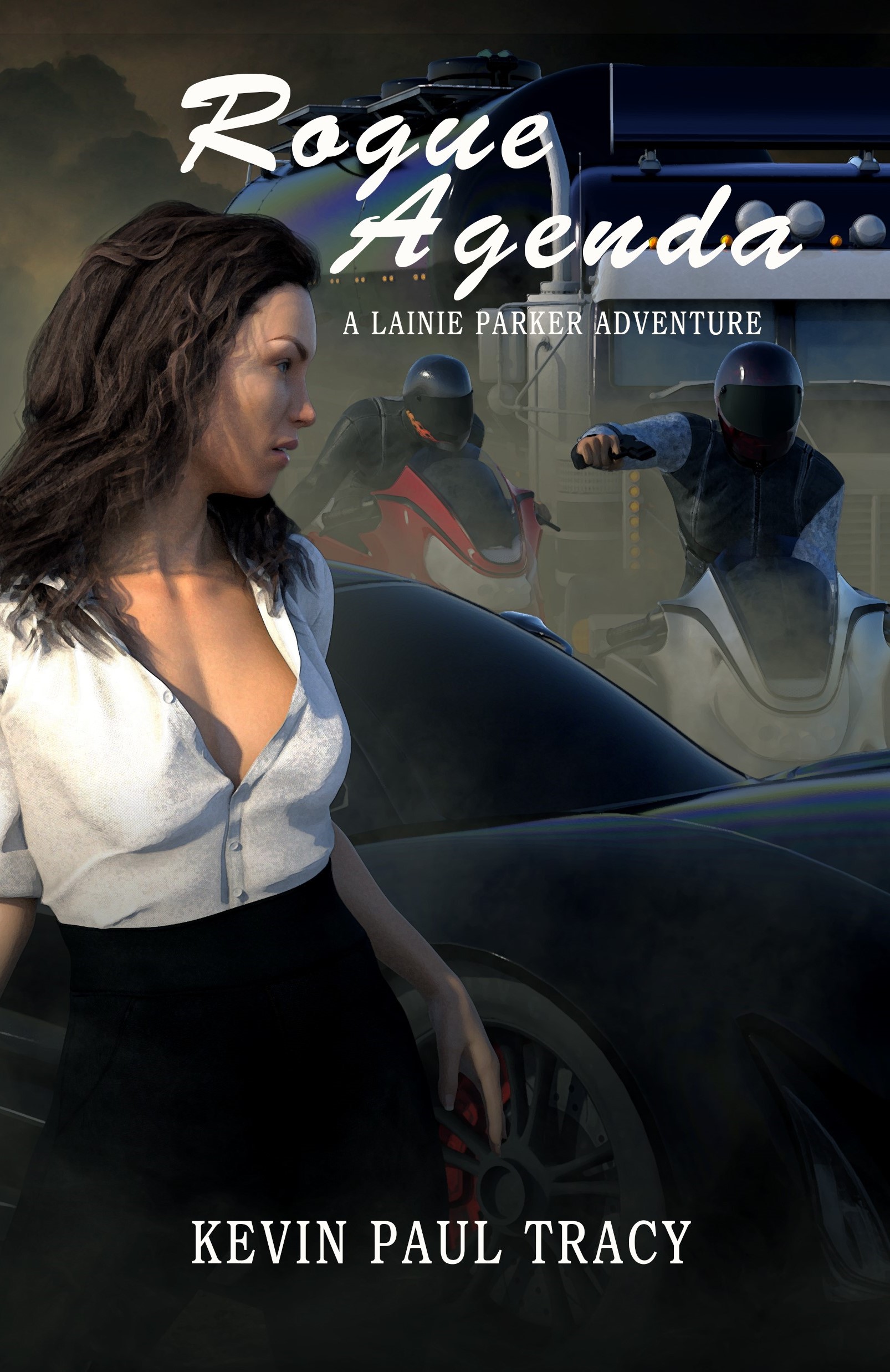
NEW RELEASE: "ROGUE AGENDA"

Hooray! My new novel, "Rogue Agenda," is now available on Amazon.com and Amazon Kindle!

In a future post I'll go into my experience with the whole publishing process, but for this week I'm just going to relax and let it settle in!

Buy it! Read it! You'll like it!

Labels: , , , , , , ,

Monday, September 02, 2013

ROGUE AGENDA: THE DOSSIERS

See The Winners Of The Giant Gummy Bear Contest

In anticipation of the release of my latest adventure novel, "ROGUE AGENDA," I decided to share the dossiers on some of the key players in the affair, recently declassified by the NSA.

LAINIE PARKER
     The most popular telephone sex talent at Capris Entertainment, 26-year-old Lainie stumbled into the job while looking for a way to offset the cost of college. Now, nearing the final stages of her PhD in Psychology, with a minor in Child Special Education, when Lainie isn't working she's neck-deep in studies and her duties as Research Assitant for the Psy department. While beautiful, smart, and a little sarcastic, she has no time for friends or love, much less running around the country trying to prove her innocence of the charges of arson and murder, hounded by a hulking killer.

SIMI AL-SEHREMNI
     Somewhere in her early twenties, this daughter of renown middle-eastern scientist Faisel Al-Sehremni, is more than meets the eye. On the surface, she's an older sister attending college at New York University more to keep a protective wing over her younger brother, Ibrahim, than to matriculate, herself. But there are many mysteries about this diminutive beauty. For example, from a culture that generally subdues its women, how did she become so strong and independent? Also, for one so young, where did she learn that specialized spinning technique of fighting that makes her an opponent not to be underestimated?

AGENT CORD STEELE, CIA
     Understandably, little is known about this handsome, charming, and enigmatic man - much of this dossier has been redacted. It is known he drives a late-model Lexus convertible with the daring if not the skill of a NASCAR pro, that he has elevated the act of stealth to an art form, and that he wields a spool of mono-filament garotting wire like a spider spins it's web.

SEAN BRANDT AKA MICHAEL GASTON
     There are nothing but questions about this CIA assassin gone rogue. Not the least of which: If he completed his last assignment, why didn't he report in as scheduled? If he completed that assignment, why wasn't the body found by the morning cleaning crew at the research laboratory in Paris as planned? Where is the man he was assigned to kill, and where, for that matter, is Brandt himself? Did he sell out? Was he compromised? And if so, was he killed or is he even now captured and being tortured? And why, of all things, did he call a telephone sex line in San Francisco from a motel in Commerce City, Colorado when he was supposed to be debriefed, captured, or killed?

If you're at all curious about these characters and more, mark your calendar for October 1, 2013 when the first Lainie Parker adventure, "Rogue Agenda," is released on Amazon.com and Amazon Kindle!


WINNERS OF THE GIANT GUMMY BEAR CONTEST

Thanks to everyone for helping me spread the word about the upcoming release of my new novel, "ROGUE AGENDA," the response was phenomenal!

Announcing the winners of the "Rogue Agenda" giant gummy bear contest!

1st Prize - A giant 5lb gummy bear: Beth Groundwater.

2nd Prize - A "Rogue Agenda" promotional mug: Tina Bates.

3rd Prize - A "Rogue Agenda" promotional T-shirt: Terry Wright

Beth and Terry, please let me know how you'd like me to get your prizes to you!

Labels: , , , , , , ,

Friday, August 16, 2013

NEW RELEASE: ROGUE AGENDA

ANNOUNCING THE OCTOBER 1, 2013 RELEASE OF...

ROGUE AGENDA
A Lainie Parker Adventure

A Novel by Kevin Paul Tracy

Description
"Lainie dropped to the mud, on her belly. Propping her elbows into the rain-sodden ground, she peered down the barrel of Sayed’s gun. She’d fired more guns since this entire ordeal had begun than ever before in her entire life. She had failed to hit a single target at which she'd aimed. But now, with Simi's life in the balance, she put such thoughts out of her mind and took careful aim."

Lainie Parker is the most popular telephone sex-line talent at Capri Entertainemnt. She is not a spy. But since witnessing the murder of one of her customers over the phone and trying to get someone - the police, the FBI, anyone - to believe her, she has been stalked and attacked, drugged and kidnapped, and suspected of murder and arson. Now, as crazy as it seems, pretending to be a spy may be the only thing to clear her name...and keep her alive. That's only if she can stay one step ahead of a hulking murderer, a sadistic terrorist, a brother-sister pair of tag-team kidnappers, and a wily CIA agent with dreamy eyes and a deadly way with a garrote.


GIANT GUMMY BEAR CONTEST

How would you like to win this giant, 5lb gummy bear?

All you have to do is help spread the word about the impending release of my new book, "Rogue Agenda," and you'll be entered in a drawing to win this and other great prizes!  There're two ways to enter...OR enter BOTH ways and DOUBLE your chances of winning!

ENTRY METHOD 1: TWITTER

STEP 1: Go to my twitter link above or go to http://www.Twitter.com/KevinPaulTracy and FOLLOW me.
STEP 2: Tweet to all your followers about the pending release of "Rogue Agenda" and include a link to this blog post.

THAT'S ALL!

ENTRY METHOD 2: FACEBOOK

STEP 2: Go to the Facebook page http://www.facebook.com/pages/Rogue-Agenda/312424322236297 and LIKE the whole page.
STEP 2: Post a status on YOUR Facebook page about the pending release of "Rogue Agenda" for all your friends and include a link to this blog post.

THAT'S ALL!


RULES

I will use your Twitter "FOLLOWS" and Facebook "LIKES" to view your tweets and posts to confirm you followed directions, above. Those who follow BOTH the Twitter and the Facebook methods of entry will have two entries into the contest for TWO CHANGES TO WIN!


CONTEST ENDS FRIDAY AUGUST 30, 2013 AT MIDNIGHT


On Saturday August 31, 2013 I will draw three entries. The first name drawn will win a giant, 5lb. gummy bear! Second drawing will win a Rogue Agenda promotional mug. Third name drawn will win a Rogue Agenda promotional T-shirt.


I will announce the winners here, as well as tweet and post a status on Facebook, so keep your eyes open for that announcement. It will be up to the winners to contact me to arrange delivery of their prizes. All shipping and handling will, of course, be paid by me.


! GOOD LUCK !

Labels: , , , , , , , , , , ,

Monday, August 05, 2013

DIY PROMOTION...OR "SELLING OUT"

Artistic purists aside, the vast majority of we troubadours tell our stories in the hopes that someone will hear them. We write them in hopes that someone, preferably many someones, will read and enjoy them. These days audiences rarely come on their own to gather at the campfire and listen to us weave our tales. Add to that the white noise of thousands of other writers out there competing for the same readers and the need to stand out and be noticed becomes readily apparent.

But of any job ever, sales is the single hardest. Ever looms the question of how to get someone's attention and, once gained, instill in them a desire to take your story home and read it. Setting aside the equally impossible task of packaging (cover design,) how do we promote our books in a way that will garner the greatest audience. Even if you've been published by a big New York house with an advertising budget and scheduled book-signings and the like, is it wise to merely sit back and let someone else promote your book and do nothing on your own to contribute? And of course if you're independently published (self-published) then you have no choice - promoting your book is absolutely essential - there's no one else to do it for you.

Let's first ask the question - what are you selling? Are you selling a single book? Even a series, or a collection of books? Well, not really. You are actually selling yourself. Marketing surveys have proven that readers are more likely to buy a book if they like the writer. Not just the way she writes, not just the stories he tells, but her look, or his perceived personal impression. Why do publishers often like to put a head-shot of the author on the inside-cover of a book? It is a way of saying, "See my smile? See this cozy, eclectic library-like setting in which I'm sitting? See, I'm a nice guy! Buy my book, it's like me: friendly and personable!"

So when marketing your book you aren't selling the book so much as selling yourself. And that means, as time consuming and uncomfortable as it may be for us reclusive writers, you must put as much of yourself out there as possible. The book is important, too, and don't forget to put it forward, but it is almost of secondary importance to promoting yourself.

PERSONAL APPEARANCES

Does that mean personal appearances and book signings? Yes, but there is only one of you, and that you can only be one place at a time, or cover so much ground on any given week. So the trick is to maximize your appearances to reach the audience you want. Book stores are great for reaching readers, and don't neglect them. But book stores appeal to the broadest possible audience of readers - some could be there to buy a fantasy, some horror, some romance, others may be there to buy an English-Tagalog dictionary! In point of fact the percentage of readers there who might be interested in just what you've written is no greater than any other venue.

So where else can you go? Well, think creatively. One of my colleagues (I hope she doesn't mind me mentioning her name) Jeanne Stein, who writes the Anna Strong series of vampire novels, went straight to comic and science fiction conventions. Here were fans of a range of genres in which hers - vampires - were not only part but quite hot, and while many of them might prefer to watch films or TV instead of reading, there were still bound to be many readers there as well.

Another friend, John Turley, does speaking engagements to groups of oil and gas professionals around the country to promote his book, A Simple Truth, about the BP oil blowout in the Gulf of Mexico. "Because my research is important to understanding the multi-billion-dollar tragedy," says John, "I've traveled extensively and made dozens of by-invitation guest-speaker and keynote presentations to universities, professional societies, major oil-&-gas companies, federal research entities, and civic groups, including a wonderful evening with The Sierra Club in Lafayette, Louisiana." And how does he land these gigs? "I have to be proactive, 24/7, and knock loud with letters and phone calls, and be prepared to defend my credibility, which combines my first career as a professor and an offshore drilling expert, with my second career as a writer...along with stand-up public-speaking skills "

You can read more about John and his book at www.JohnTurleyWriter.com.

The point is, try to be creative about where you go to personally promote your books. Put some thought into where your target audience is liable to congregate, and work to get into those venues.

GOD BLESS THE INTERNET

Of course every writer puts up a website, or maintains a blog (short for "Web Log," a sort of online journal...you're reading one right now) or both. But too many call that done and then sit back and wait for the web-hits to come rolling in. Those same writers soon wonder why they don't.

The Internet is a godsend when it comes to interpersonal communication, especially when advertising a product or service. You can reach a vast number of people with much less effort or expense than was once needed. But in many ways putting up a website or a blog can actually double or triple your work. It isn't enough to simply put up a website - you must then drive traffic to your website, and that means promoting it. Suddenly now you are not only trying to promote your book and yourself, now you have a website and/or a blog to promote as well!

That's not to say that a website/blog isn't a great idea - it is - but that alone isn't enough.

One of your strongest tools in sales is word-of-mouth, a chain of customers who, having read and enjoyed your book and recommend it, verbally, to others. Imagine if one reader told five friends, and each of those five told five friends, etc. You can see how quickly the word of your book can spread to vast numbers of people very quickly.

And one of the greatest tools for getting that word of mouth chain going is...

SOCIAL MEDIA

We've all heard the term. But what is social media, really?

Social media sites are websites at which Internet users congregate to interact. In most cases they not only swap information about themselves and others, they can share photos, video clips, links to things they like, etc.I'm sure you've seen and even joined in at sites such as Facebook, LinkedIn, Twitter, etc. And there are many others not so widely known.

Here you can place a promotion for your book for your friends to see, and hope that they will share the link to your ad with others. Be careful not to "spam" your friends with ads that make them want to block you. But there are more subtle ways to keep your ad ever present in their minds.

Promoting a contest in which those who see the ad must answer a trivia question, preferably something related to your story, to win something desirable, such as movie tickets or amusement park tickets. Of course a free copy of your book comes with the prize. This will drive traffic to your website, where people will have the chance to browse your other content, learn more about you and the books you've written.

A friend and ebook publisher, Terry Wright (www.TWBPress.com) produces short trailers for the books and short stories he publishes and disseminates them to sites like YouTube. They are often simple, but very effective in driving traffic to his website, where a great number of publications await to dazzle fans of online reading.

In conclusion, the trick to promoting your book is promoting yourself. And the trick to doing that is to be proactive, imaginative, and persistent.

Labels: , , , , , , , , ,

Saturday, July 20, 2013

AN INTERVIEW WITH NICOLE DISNEY

I had the pleasure of doing a full-manuscript critique of Nicole Disney's (www.NicoleDisney.com) new book, "Dissonance in A Minor," prior to it being published (as opposed to an excerpt-by-excerpt critique that critique groups do.) Doing this for another writer is fun and informative, as it not only exposes you to genres you might not otherwise read, but helping other writers identify problem areas in their manuscripts really helps you see such things in your own. It makes you a stronger writer as well.

"Dissonance in A Minor" is the story of Rainn, a tough street person trying to make it big with her band, who struggle with the usual growing pains of any group of musicians, when she meets Jasselle, a seemingly together and almost dream-like figure. But as Rainn feels herself inexorably drawn under Jaselle's spell, she becomes more and more aware of the woman's darker side.

I so enjoyed "Dissonance in A Minor" that when it was published I knew I wanted to interview Nicole on my blog. I even knew some of the questions I wanted to ask. So here, gentle readers, is my interview with the very talented Nicole Disney.

Q: Nicole, your novel is, on the surface, a romance between lesbians. Why should straight people read it?

Though my book can be categorized as a lesbian romance, it is not about the fact that my main characters are lesbians. It is not about sexual discovery nor is it a coming out story. It is about homelessness, guilt, and the desperation of addiction. Anyone can understand and connect with the pain of witnessing the person you love most deteriorate into someone barely recognizable. These are by no means issues reserved for lesbians. The orientation of these characters is actually more of an afterthought in the scope of the book.

Q: What is the meaning of the title, "Dissonance in A Minor"?

The word "dissonance" appealed to me for this story because it has a few applications. It can be used as a music term in reference to an inharmonious combination of notes that gives the impression of tension or instability. However, it can also describe as inconsistency or disagreement, either with another person, two aspects of life, or between a person's beliefs and actions. All aspects of the word fit into my story, whether it is Rainn's knowledge of her band's talent at odds with their performance, the evidence Jaselle is too addicted to recover against Rainn's belief she will, or Jaselle's desire to treat Rainn well but failure to do so. I chose the key "A minor" because Chopin's Prelude Op. 28 No. 2, a significant song in the story, is in the key of A minor (and is a very dissonant piece).

Q: What was it about this story that compelled you to write it?

I wanted to write something raw, emotional, and fearless that would be capable of hitting people in a way that it would linger after. I didn't want to cut scenes short before they fulfilled the true intensity of the moment. As far as addiction, specifically, I've always been drawn to understand the power of it. There are so many things to consider, from the original pain that a person might be trying to numb, to potentially being cut off from family as a result. There is also an element of shame that is common, for the betrayals that usually follow and feelings of weakness for lacking the ability to stop.

Q: Your characters are fictional, but are they representative or composites of real people involved in the true events?

None of my characters are based on real people. All of the personalities are completely fabricated, though I do like to sprinkle in extremely minor details from real life. For example, Jaselle and Rainn drink vodka and cranberry juice, which is the first mixed drink a girl ever made for me. Another is a story Jaselle tells about a Halloween night when she believed her angel costume would allow her to fly. That is something that happened to my younger cousin that I found incredibly endearing and wanted to live on.

Q: What would you say is the central theme of "Dissonance in A Minor"?

If I had to choose one theme, I'd say addiction is the most vital to the story. Jaselle's addiction to meth is the most obvious example and her addiction is equally mental and physical. I also found it interesting to examine Rainn's love for Jaselle as an addiction. In many ways, Rainn also behaves like an addict. As the story progresses, Jaselle is Rainn's first and last thought of every day and if for any reason she is denied that contact, everything must wait until things are set right. It causes her to damage her relationships with her friends and even distracts her from her music. I don't think to say Rainn is addicted to Jaselle is to say that she loves her any less, but that love is a form of addiction.

Q: Your protagonist lives a hard life, but makes no excuses for the choices she's made, which is a lesson more of us could learn. What other lessons can readers take away from your novel?

Rainn carries a burden of guilt over her brother's death. A large part of that is because they were close and that she witnessed his death, but even more importantly, Rainn knew he was huffing butane and that it was dangerous. This is a major source of her guilt and plays a heavy hand in how she handles Jaselle. I think a lesson readers can take from Rainn is that when we are in impossible situations that might not have a clear right and wrong answer, imagine the worst possible outcome, and then ask what you would wish you had done. Having said that, I think the next lesson is that no one can force another person to be happy or healthy, and sometimes, as heartbreaking as it is, there isn't anything you can do. It doesn't mean you have to exile or punish yourself.

Q: Music plays a central allegorical role in the book. Could you explain its significance to the story?

Rainn sees her music as an expression of her soul. To reject it is to reject her, and to love it is to love her. It is a safe place where she can both protect and confess her secrets simultaneously. There is a contrast between the structured, classical music she learned growing up with her mother and the freedom of her band. These are equally representative of her life. Rainn's brother rejected classical music completely, desiring only the freedom and paying a heavy price. Following her brother's death, Rainn submerges herself in the band but maintains a taste for classical music that she will revisit when living with Jaselle. Classical music represents the part of Rainn that desires a home, while rock is passion, rebellion, and independence.

Q: There are "bad guys" in the classical sense in your story, but wouldn't the primary antagonist, if unwittingly, be Jaselle? Why or why not?

As Jaselle's addiction deepens, Rainn sees a change so dramatic in her eyes and the way that she speaks that Rainn feels she is talking to something that is evil. She begins to refer to this side of Jaselle as "the demon". Noah challenges this as excusing Jaselle from her own actions. At the heart of this conflict is the answer to this question. Is the addiction capable of being an antagonist or is referring to the addiction as something separate from Jaselle a displacement of guilt? I think the issue is debatable, but I see the addiction as the antagonist.

Q: Noah fills the significant role of fulcrum in the turning point of the story. Expound on this.

When Noah finally exposes his reasons for closing himself off from Jaselle and her addiction, he proves himself to be much more feeling and reasonable than Rainn would have guessed. He is also challenging Rainn's conviction that she can save Jaselle. Noah focuses on Rainn and her right to have a happy life, a concept that Rainn has so connected to Jaselle that she sees saving Jaselle's life and being happy as two inextricable things. Having these arguments delivered to her gives Rainn the opportunity to debate what she has otherwise felt too guilty to deliberate.

Q: What has been the feedback you've gotten from readers?

I've gotten fantastic feedback so far. Almost everyone I have heard from said they read it in one or two days because it is a quick read and they "one more chapter"ed their way all the to the end. The consistent comment I have been getting is that the book is extremely emotional.

Q: How has your book been received by those who have experienced some of the themes in your book, such as addiction, guilt, loss, etc.?

The reception has been amazing, which is extremely important to me. I wanted this story to be as authentic as possible. I have heard from several readers who used to play in bands, owned clubs, or were music producers. They usually say they found the band scenes hilarious and the characters realistic. The other group I have received even more feedback from has been addicts and recovering addicts. This group has a darker identification with the story, saying it is both graphic and realistic, capturing the chaos of addiction.

Q: Are you working on any other projects? And if so, will they be like this one?

I am working on a couple of new projects. One is much more similar to Dissonance in A Minor than the other, but in both stories, I maintain my taste for a dark and edgy set of issues. I'm not sure I will ever tire of diving into those worlds. 

Q: What was the one thing you consider the most valuable tool in working to get your book published?

I would have to say the Rocky Mountain Fiction Writers group was the most valuable tool for me because it is really like ten tools rolled into one. I was able to improve my actual writing with their classes, network at the events, dissect my stories in critique groups, pitch editors and agents at the annual conference, and attract a little attention with a contest win. It is an extensive support system for writers.

Q: What would be your advice to those attempting to publish their manuscripts?

My advice would be to join a critique group. This is a great way to figure out if your manuscript is ready and get it there if it isn't. Even if you don't need extensive changes, your group members will see things you, as the author, won't catch. Most groups are even willing to help with query letters any may know things about the publishing industry that you don't.

Q: What is your writing process? For example, do you write eight hours a day, or only when the mood strikes you?

My process is constantly evolving, but it always involves deadlines. For a while I experimented with reaching a certain word count every day, but found that method was resulting in quite a bit of writing I would eventually delete. Deadlines give me enough freedom to wait for inspiration, but not enough to wait forever.

Q: Do you write an outline, or do you just start writing and see where it goes?

I outline obsessively. It is not unusual for me to spend a full month or even two on the outline before I write a single word. I hate the feeling of writing without knowing where I am trying to get. It makes me feel like I'm rambling and boring the eventual reader. I also have the fear that readers can tell when I go back to add in foreshadowing as opposed to knowing where it belongs as I go. That being said, sometimes characters have their own ideas about who they are or what they want to do. I'm always willing to let them ruin my outline, but I'll quickly create a new one.

Q: The second act of any story, or the "middle part," is often dubbed the "swamp" by writers because it is the most difficult part of any story to write. Did you struggle with this, or did it all come to you pretty smoothly?

I dealt with the "swamp" by constantly reminding myself not to hold onto any scenes for later (with the exception of a few structurally fundamental ones). If I ever felt the story was dragging, but had a great scene idea I wanted to use in twenty pages, oh well, it's moving to now. Doing this takes a lot of faith in yourself that you will come up with something better to use in twenty pages, but after the first few times work out, it becomes less scary.

Q: How long did it take you to write "Dissonance in A Minor"?

I spent about a year writing it. That is a time frame I would consider too long for future projects, but I'm glad I really took the time to baby this story.

Q: Who are some of your favorite writers, who've informed or influenced your own writing?

My list of favorite writers is unreasonably long, but to name a few I can say truly made me a better writer I'd have to say Anne Rice, J.D. Salinger, Chuck Palahniuk, William Styron, and Edgar Allan Poe.

I want to thank Nicole for taking the time to indulge me. I hope you, the reader, enjoyed it as much as I did, and I hope you pick up Nicole's new book "Dissonance in A Minor" - just click the book cover above, I truly think you'll find it a rewarding read.

You can visit Nicole Disney's website at www.NicoleDisney,.com.

Labels: , , , , , , , , ,